
Welcome returns
Thu, 14 Feb 2013 9:21 am – Posted by Mandy | 11 Comments
The furore sparked by Gareth Morgan over New Zealanders’ somewhat careless attitude to the way in which we let our cats stalk our neighbourhoods to pick off native birds is best evidenced in the suburbs surrounding Wellington’s much prized fenced sanctuary Zealandia.
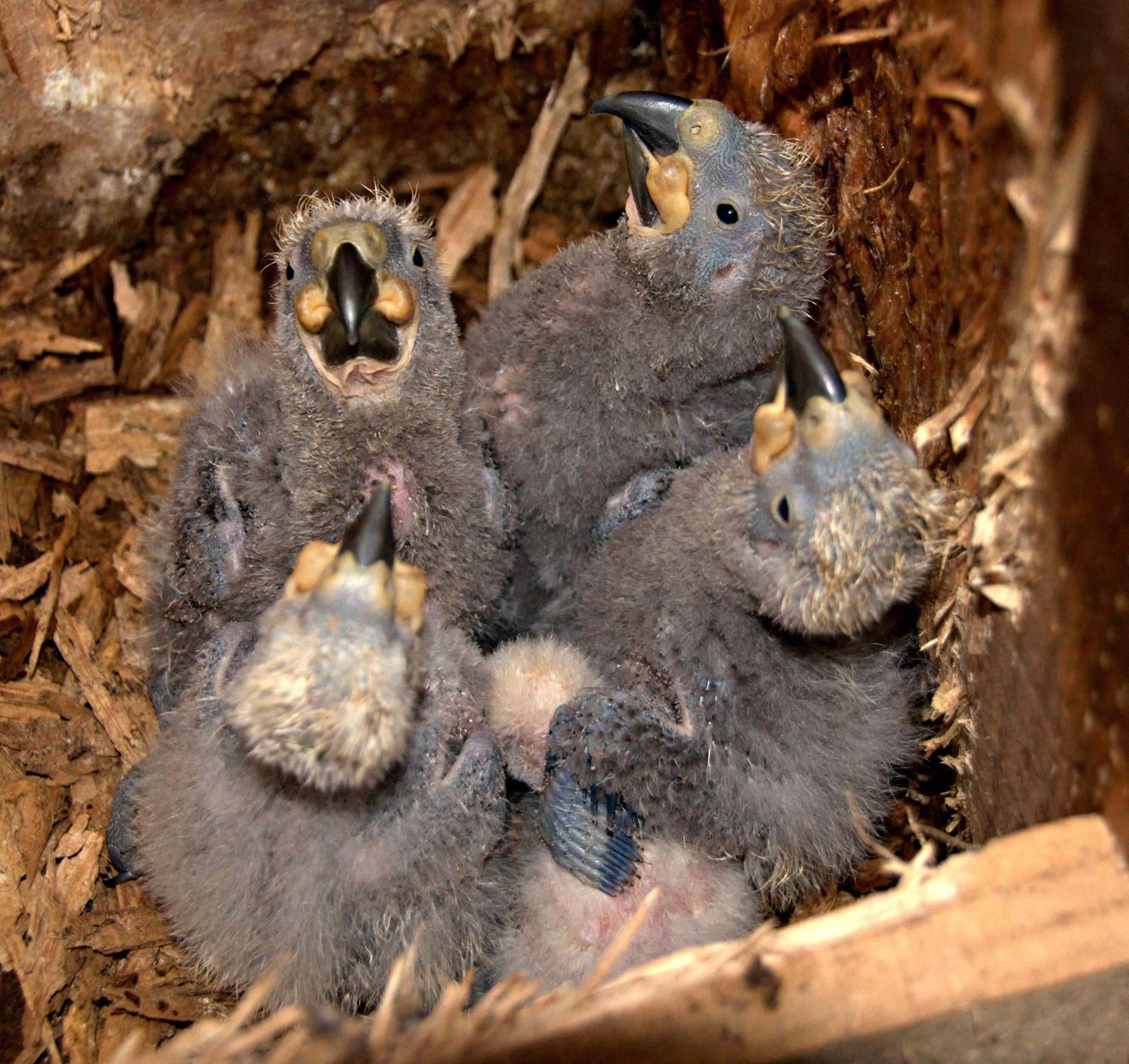
Kaka have recently been found to be breeding outside the fenced sanctuary Zealandia. Photo supplied by Zealandia
In neighbouring Kelburn – where my parents live – whiskered faces can be seen peering from nearly every gateway. And although they’re one of a handful of predator species that live beyond the fence-line, they’re not helping the spread of incredibly rare birds – such as bellbirds, saddlebacks, stitchbirds and kaka - into neighbouring areas.
Over the next three years, ratepayers are due to fork out 2.1 million dollars to prop up this thriving conservation project and 450 volunteers will work tirelessly to protect the 35 threatened species living within this fenced wildlife community.
Outside the fence- where 13 pest species roam – it’s a different story.
Although areas like the botanical gardens, reserves and neighbouring private land have been targeted by the WCC, the Wellington Natural Heritage Trust, Makara Peak Supporters and other community groups and committed individuals, there has been no co-ordinated community involvement to better manage cats, and initiate planting and pest control activities to “fill in the gaps”.
Last year, the first kaka nest was seen outside the fence-line and this may become commonplace for a whole range of birds if a network of community volunteers can be encouraged to undertake a suite of conservation measures in their own backyards.
To get this started, Colin Ryder from our Wellington branch & WNHT has been involved in putting together a team of conservation groups, Zealandia and public agencies to set up ‘Halo’ – a proposed community project to create a protected buffer outside the sanctuary.
As well as likely supplying the residents of Kelburn, Northland and Karori with traps, plants from our nursery and perhaps subsidised cat bibs and bells, the project aims to give residents the know-how to create “bird-friendly” ecological habitats on their own properties.
If the project goes ahead, the message will be spread first through Forest & Bird’s and Zealandia’s networks and later, if need be, throughout the wider community through leaflet drops and public meetings.
If all goes well, this can be rolled out across Wellington. Perhaps the whole city can become a ‘Zealandia’ and we can start one by one to realise the late Sir Paul Callaghan’s vision of a network of a dozen 100,000 hectare predator-free “mainland islands”
If anything, Gareth’s public campaign has helped to shift our thinking. If we really want native wildlife in our backyards first we need to know the enemy. And that’s not just cats, but the whole caboodle of mammalian predators that do nightly raids on birds’ nests.
By failing to do pest control and planting on the fringes of sanctuaries like Zealandia, Wellingtonians are not receiving the full benefits of the sweat and money that has gone into this incredibly successful project. And, I must say, kaka nesting in your garden would be a very welcome return, wouldn’t it?

Can you get cat bibs in NZ?
Hi Skye,
Not as far as we know. Best to keep checking this site, http://www.catgoods.com, because they may start retailing them in NZ now that this issue has been brought to the public’s attention
Cheers,
Mandy
They are not physically available in New Zealand but can be purchased online from an Austrlaiian distributor for $(Aust)16.95, including postage). See http://www.catbib.com.au
Last night I went outside to water and heard a lot of scuttling around a tree. It was dark and in the spotlight was a possum. We live on the Kapiti Coast and have several rare species flying in our garden. This strike is so timely to remind us to set some traps.
How about they install bird boxes on the top of every power and light pole !
Not to many predators can scale these poles and if they started at Zelandia and spread outwards, there could potentially be tens of thousands of bird safe nests high above the predators in Wellington in no time and they would act as corridors to the parks and reserves all over the city. There’s no reason why they then couldn’t spread right across the country. A small pittance of money could have a massive impact, someone pick up this idea and run with it, please.
Thanks Ill keep an eye on them, and perhaps ask a friend to order me a couple. At the mo my cats are indoors(not keen on them going into the bush hunting) but if i can it would be great to allow them out and it be safe for the wildlife. The bibs look extremely annoying, but worth a go! Might be better than being indoors all the time.
I think getting people to use their backyards as wildlife corridors is fabulous. The birds here are incredible (im in the country) thousands of finchs, lots of native birds, and all much more visible since ive had the cats in for the past year. One was not much of a hunter but the other was wild and must have been keeping them away, or catching them. He is definitely not wild now!
Hello,
Good idea to get rid of cats to enable the bird life to come back. However, pest control work will have to be doubled, as cats catch and kill many rats and mice.
I would like to address a couple of comments.
First, cats seem to tolerate the bibs. They don’t cause any distress to the animals and don’t interfere with their normal activities and behaviour (apart form hunting, of course).
Second, I agree with the comments about other predators. They all have to be dealt to otherwise something else will fill the gap. (As happened on McQuarie Island when they got rid of the cats and the numbers of rats and rabbits exploded). Try to explain that to one of Morgan’s people but they weren’t interested in hearing it.
Forest and Bird as an organisation needs to educate its membership about cats. Cats are a PREDATOR nothing else. Every country that has cats there are problems. As long as we have these cat colonies we will have problems. The ownership is sky high. Everybody who visits me says ‘Beautiful country SHAME about the wildlife”.
Last year I was physically and verbally assaulted by two members of the Far North Forest and Bird organisation. I was trying to explain that the cat colony they supported was being monitored. The Kerikeri Police got involved. It was a retired doctor and his wife. So I would say they are not stupid people. I approached Puketi Trust, Aroha Island, DoC shadehouse, local F & B branch committee, Project island Song and informed them of this incident as this couple are doing work with these groups . Well the old boy network came into play. The ranks closed quickly. I am also a F&B member. So rules for some and rules for others. This couple are involved in many conservation projects so the SPCA has infiltrated everything we treasure.
Forest and Bird has not focused enough on cats as a Predator. So come on now leading Conservationists start doing your job. Educate, time is running out. 46% of the population of NZ has a cat. I DO NOT own a cat or dog or any introduced predator and never will as I know the impact they make on the special biodiversity in New Zealand.
I dont know if people are aware of the new good earth traps for pest animals- I think that is the name of the company. They have made a trap that kills the animal apparently HUMANELY with a captive bolt. They are the only trap available that renders the animal irreversably unconcious in less then 25 seconds which is not bad compared with other commonly used traps(tims up to 3mins) and poison. These traps kill the animal immediately and it drops out, and can then kill up to another 25 animals without any human intervention. I think that sounds like a humane and sensible option for pest control, and one that can be used in our big forests without having to be continually rebaited. available through the internet.
Pleased to hear that the bibs are comfortable, i am going to try them. And also noone seems to be suggesting that ALL domestic cats must be desexed by law, wouldnt that solve the problem within 15 years? In 15 years there should only be a few very old cats! Yes I know that is a long time, but a period in which people can learn to keep their cats indoors, learn to be protective of our wildlife and if that is not done, then i dont see there being any change in the future at all. Desexing of all cats would keep owners moderately happy (they could keep their pet till it dies) conservationists and the SPCA happy as the domestic cat breeding becomes subtantially less. Everybody happy, and eventually if wild populations are controlled, the wildlife may have a chance. Of course there will be those people that dont follow the trend will let their animals breed, however its a better option then doing nothing.
NGM 21 February
The comment about bird boxes on power poles; I have observed many MYNA birds use the sheetmetal strips (to keep possum from shorting the lines) as nests. Mynas kill many native species. Attach strips so as not to provide a nest site for Mynas. Any comments from the power companies? Is this possible?