Blogger: Web Manager for Forest & Bird, Mandy Herrick
Given their penchant for getting drunk on fermented berries, it comes as no surprise that our kereru is one of our more accident prone birds. In fact, they get in into so many scrapes that a small hospital has been set up in Dunedin to care for these injured birds.
The hospital is supported by our Dunedin branch, DOC and Watties, and relies heavily on the goodwill of volunteers that nurture these birds back from the brink.
Earlier this year, I met up with the people who run the hospital and was introduced to some of their feathery patients.
Blogger: Forest & Bird’s Web Manager, Mandy Herrick
We touched down on the moon in 1969. We travelled 11kms to the sea-floor in 1960. We peered into living cells and discovered DNA in 1951.
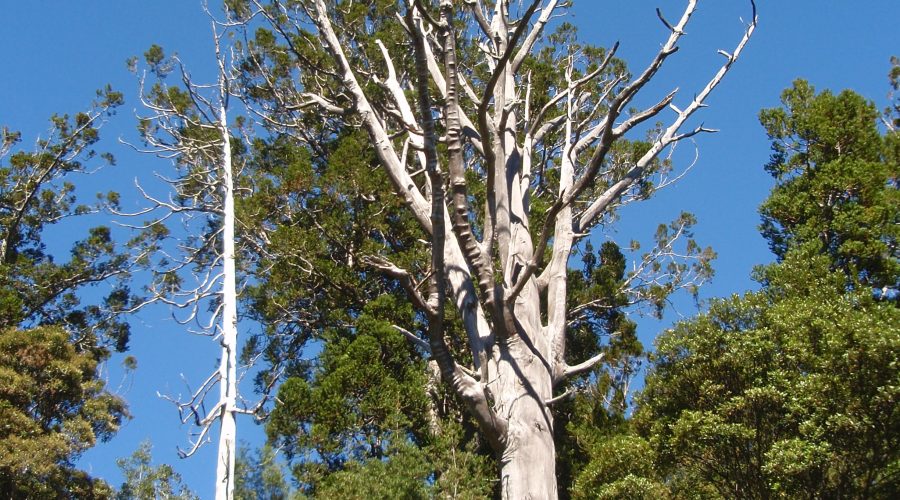
Moon-travel, deep-sea exploration, cell-research, we’ve done it all, and yet, we still know very little about the unexplored communities that live in the tops of our trees.
Although numerous botanists & entomologists have collected samples from these lofty forest communities, it was only in 1995 that scientist, Graham Dorrington, set off in a dirigible (airship) above the forests of Borneo that we really started to crack open this undiscovered world.
Still 15 years on and this tree-top world remains very much unstudied. It’s a sad fact that we know more about what happens 20 metres underwater than we do in the tops of our trees.
However, that’s all changing.
In the past month, Ark in the Park, the New Zealand Geographic Trust, DOC and Auckland University have been building upon the scant research into our tree-top communities by launching insect-o-logists, tree-o-logists and reptile-o-logists into our trees.
Forest & Bird is concerned about a proposed “Game Animal Council” that would take over management of four of the largest and most tasty pest animals in New Zealand - deer, pigs, thar and chamois.
Deer ravaged forest, photo courtesy of DOC
We think it’s essential that management of these pest animals and their impact on the ecology of our public conservation lands remain with the Department of Conservation.
Unfortunately the new proposal differs from a panel recommendation in 2008, that affirmed that conservation remains the priority.
Many groups have an interest in pest animal management - hunters, conservationists, tourists, farmers, you name it - and it is important that a government agency can manage the challenges of pest managment and the conflicts between stakeholders.
Blogger: Forest & Bird’s South Island Regional Officer, Debs Martin.
Back in the mid 2000s, after hearing rumours of a possible hydro-scheme, I was assigned the (tough!) task of visiting the Mokihinui River.
Our South Island Conservation Advocate, Debs Martin (top right), gets aquainted with the Mokihinui river.
A few months later, I was set adrift on a raft, and found myself thundering over and around gigantic boulders tossed into the valley from earthquakes.
As we bucked and romped over the white water, I caught glimpses of rimu standing like sentinels above the colluvial flats, rata festooned with kiekie and long-finned eels threatening our raft.
Paddling through the steep limestone and granite gorges, the scene before us was re-drawn at every bend, as the West coast weather did its best to surprise, baffle and disarm us.
Bloggers: Poet laureate (2003- 2005), fly-fisherman and mountaineer, Brian Turner, and Forest & Bird’s Conservation Advocate Nic Vallance.
On Sunday, concerned Cantabrians including some very passionate entertainers, artists, poets and speakers will be descending on Cathedral Square to add their voice to the growing discontent over the management and protection of Canterbury’s rivers.
The Hurunui river. Documents obtained by Forest & Bird showed that changes made to ECAN legislation were made to reduce 'blockages' to development. The Hurunui was one of the rivers where they were looking to 'accelerate' development.
Many of Canterbury’s rivers are legally recognised as ‘nationally outstanding’ and have been gazetted with a Water Conservation Order (WCO) – something which gives them national park-like protection.
However, in the past six months, the whole process of reviewing/placing these orders has been stealthily re-engineered in favour of water-hungry developers.
Blogger: Web Manager for Forest & Bird, Mandy Herrick
Our admiral butterflies have had a hard-time of late. In an ongoing operation to eliminate any plant that is prickly, or stingy we’ve pretty much obliterated their youngin’s only food source: nettles. Slowly, over the years, our admiral’s nettle-filled grazing ground has been replaced with a vista of grass, roses, palms, and all variety of unedible plants.
We - unthinkingly - have put our admirals on a starvation diet.
However, there are a few people that are on a crusade to return these winged-wonders to our skies.One of these butterfly-lovers is the broadcaster, zoology guru and birder Graeme Hill. He has spent the last few years breeding red & yellow admirals, fending off nasties (such as paper wasps, German wasps and common wasps ) and educating people about the importance of nettles.
Blogger: Forest & Bird’s Web Manager, Mandy Herrick
In the weekend, over 80 people braved the wild weather to welcome two endangered kokako into their new 2000 hectare home in the Waitakere ranges.
Six kokako were released into the park late last year, so this release will help boost numbers to create a self-sustaining population.
This release is part of a broader effort to re-colonise this ancient kauri-forest with the creatures that were once abundant in these parts - such as hihi, whitehead and North island robins.
Kokako were last seen in the Waitakeres in the 1960s - but were wiped out locally due to predation. Their numbers are woefully low (read: 750), but the Department of Conservation is hoping to have 1000 breeding pairs by 2020.
The newcomers, which come from Tiritiri Matangi, are expected to fit in well with the kokako already at the Ark – despite differences in song dialects.
In this video, I spoke to one of the pint-sized volunteers and recorded the release of these blue wattled crows into their new homeland - a momentous occasion indeed!
There’s an old saying that a bird in the hand is worth two in the bush.
It’s sort of true with mining in Schedule 4 lands too.
To stretch the metaphor to the case of Schedule 4 mining, getting the ‘bird’ buried under the bush will mean we lose the bird in hand and the two in the bush.
We’ll also badly damage the bush itself, and potentially scare off quite a few of the 1.6 million birds* that fly in to enjoy the bush every year.
This is pretty much the overall conclusion of three economics reports that Forest & Bird commissioned and appended to its submission on Schedule 4 mining.
Update: Celebrated physicist Professor Sir Paul Callaghan concurs. He said last week that the Government’s plans to mine on conservation land are “stupid economics”.
* 1.6 million international tourists participate in nature-based activities in New Zealand each year
Our Ministry of Fisheries has just received possibly the largest wake-up call to fish more sustainably – care of the world’s largest shipping company – Maersk.
Orange roughy: staying put ,
The company announced yesterday* it is refusing to transport Orange roughy, Antarctic toothfish, or any of our shark species, because it believes these fish are being fished unsustainably.
On Radio New Zealand this morning, the Ministry of Fisheries tried to defend the fishing method used to capture orange roughy - a long-lived species (some live up to 130 years) that is caught using highly destructive bottom trawl fishing methods along unique deepwater seamounts, pinnacles and canyons.
Bottom trawling is one of the most environmentally destructive fishing methods in the world.
It employs large nets ranging in size from 4-60m in height and stretching 150-200m in length, in effect taking with it a large amount of bycatch (read: threatened sea-lions, albatross, and other sea-birds). And that’s not to mention what damage it inflicts on our sea-floor.
Blogger: North Island Conservation Manager, Mark Bellingham.
Over the past 60 years, the barn owl (tyto alba) has been spotted on many occasions in New Zealand from Westland (1948) to Auckland (1985), but it’s never gained a good enough foothold to be classed as a native (i.e breeding) bird.
And no wonder. Any dishevelled bird that arrives on our shores care of a rogue wind, must survive on strange foreign tucker, fend off exotic predators and hunt out a suitable mate.
Cue: stomach aches, loneliness, unanswered mating calls and scraps with unknown foes. The odds that are stacked against them are just mind-boggling.
And yet, so many of our birds have done it, even those ones that are challenged in the wing department (read: the pukeko, the fantail, silvereye).